Frequently asked questions & answers

Home / Wired and Inspired / Frequently asked questions & answers

Frequently asked questions about electrical systems and batteries

Do you have questions about batteries, main switches or why your fridge won’t start? Here you will find the answers to the most frequently asked questions we receive – from basic electrical concepts to practical solutions to avoid common problems on board.

Not finding what you were looking for? Get in touch with us!

What do the units mean?

Current is measured in amperes A
Voltage is measured in volts V
Power is measured in watts W
Energy is measured in watt seconds Ws
or kilowatt hours kWh.
Ex. lamp of 5 W draws: 5 W / 12V= 0.42A. In 5 hours it draws 5×0.42=2.1Ah
In boats and cars, ampere hours (Ah) are used to measure energy. To get it right, you need to know the voltage. A 75 Ah battery contains twice as much energy if it is at 24 V than 12 V.

If you want a main switch, it is important that you choose one of high quality.
Our tip is to choose a switch from a well-known manufacturer.
Hella has a good model on the market in which both the switch and the key ring are made of metal. This reduces the risk that the switch cannot be switched off due to a melted key.

Electricity tank meters that only count ampere-hours are risky. Because the instrument does not know the efficiency of the battery, Ah-counting instruments will sooner or later miscalculate. Then you risk deep discharging the batteries, which significantly shortens the life of lead batteries.

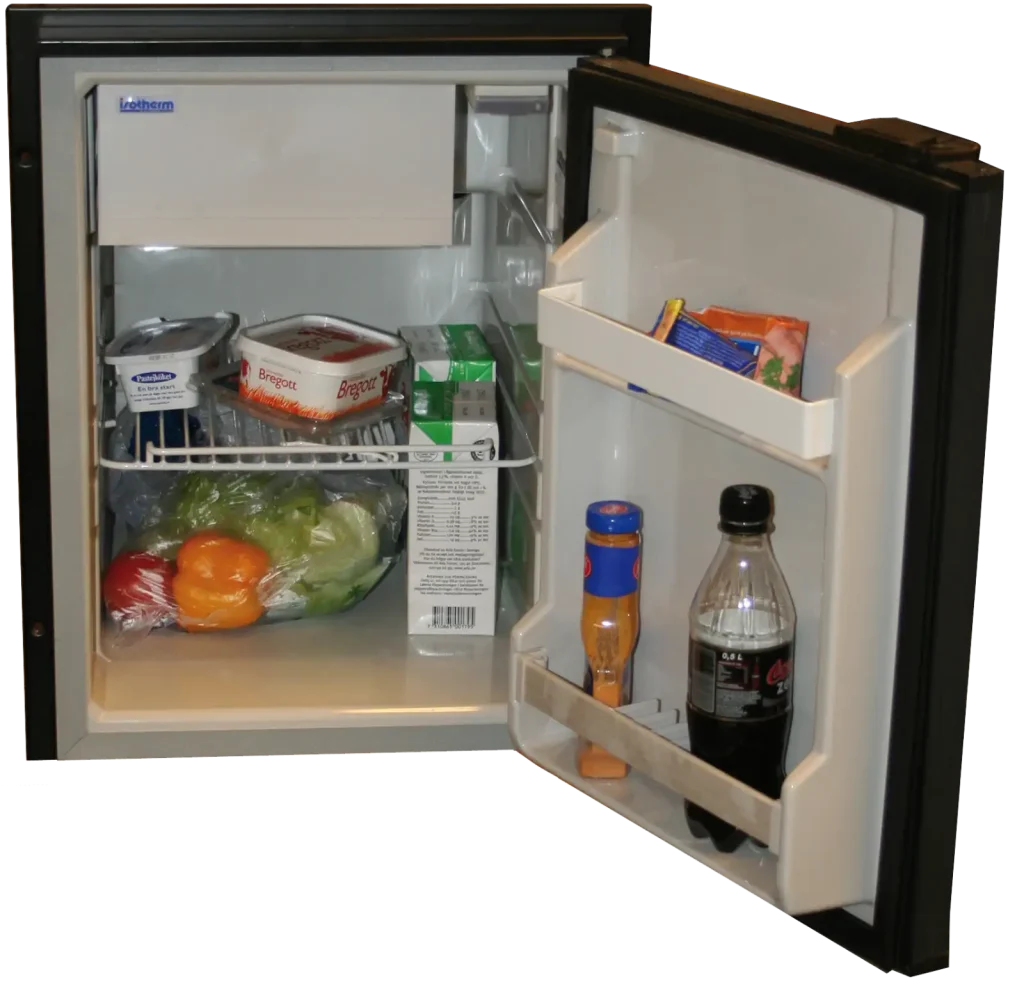
The fridge has a built-in voltage monitor that switches off if the voltage is too low, often 10.5 V. This is to protect the compressor motor.
These voltage switches are common because electric motors risk burning if they try to start at too low a voltage.

If the cable to the fridge is too thin, the fridge will switch off automatically, so quickly that you won’t even notice that the fridge has tried to start.

Make sure the cables are coarse enough for your heater or refrigerator. This normally means that you need to splice the cables coming out of the equipment with a coarser cable.

More services we provide

Articles & Films

Security and safety

Cables & Connectors

Energy balance

Wiring diagrams

Batteries

Separate batteries

Cable dimensioning

Charging & Alternators